San Juan in Spain: The Magical Night That Welcomes Summer

If your first summer in Spain happens to coincide with June 23rd, you may experience one of those moments that makes you stop and think: “This is definitely not something I would see back home.”

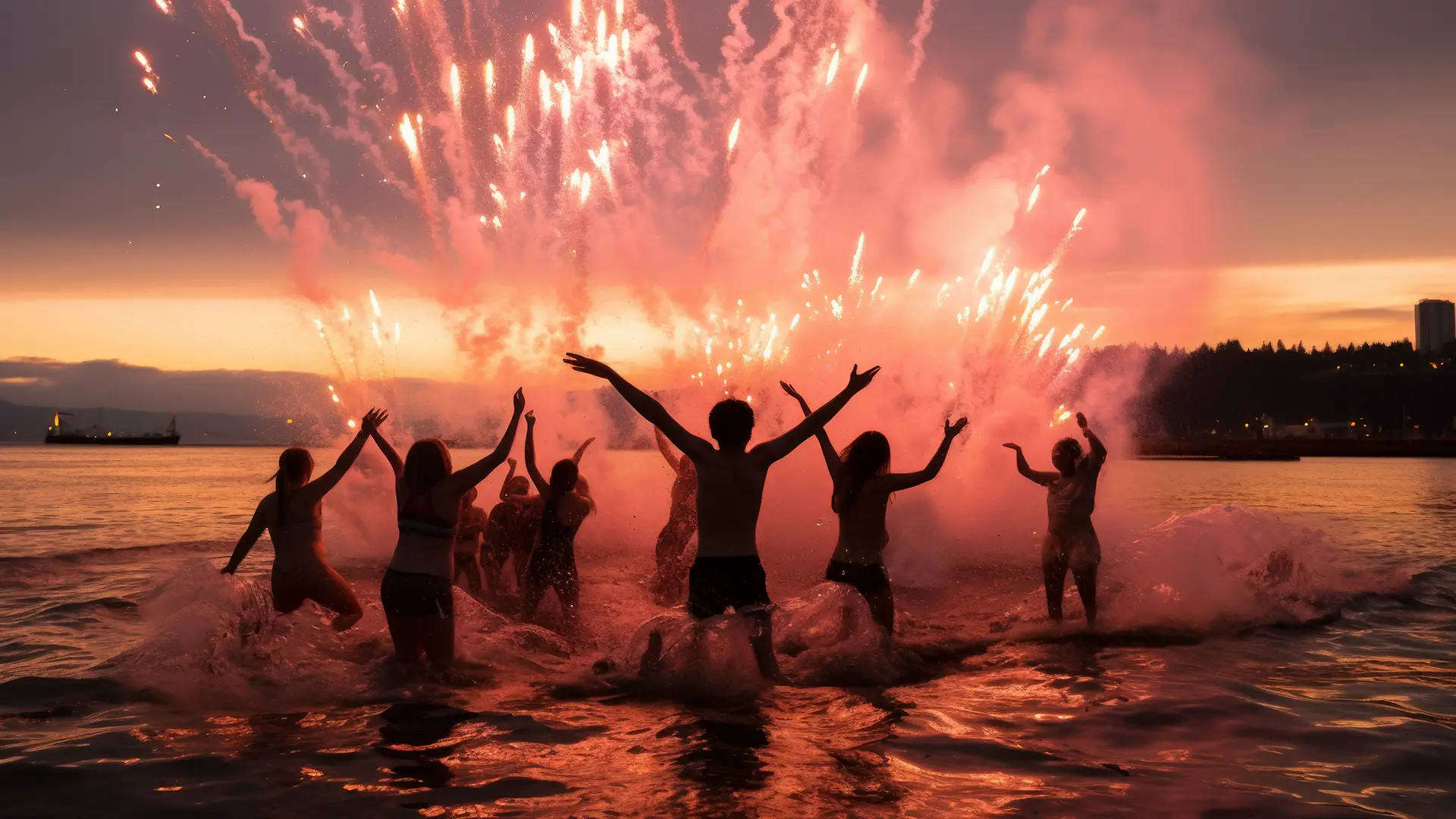
As the sun begins to set, beaches start filling with families, groups of friends, and entire communities carrying coolers, folding chairs, and bags of food. Bonfires appear along the sand. Fireworks light up the sky. Music plays everywhere. And long before midnight, there is already a sense that something special is about to happen.

For many Americans, it can feel a little like a mix between the Fourth of July, a beach party, and an ancient cultural ritual. But in Spain, this is not simply a celebration. It is La Noche de San Juan, one of the country’s most beloved traditions and the symbolic beginning of summer.

What Is San Juan and Why Is It Celebrated?

The Fiesta de San Juan takes place during the night of June 23rd to June 24th. Although today it is associated with the birth of Saint John the Baptist, its origins are actually much older and date back to ancient pagan celebrations linked to the summer solstice.

For centuries, people believed that fire could purify the soul and protect against bad luck. Bonfires were lit to “give strength to the sun” as the days gradually began to shorten after the solstice.

Even today, fire remains the heart of the celebration. Across Spain, people gather around bonfires to symbolically leave behind worries, bad memories, and negative energy from the previous year.

Water also plays an important role. In many coastal areas, locals wash their faces or enter the sea at midnight, believing that the water has special purifying properties on San Juan night and may bring health, luck, and renewal.

Bonfires, Midnight Rituals, and Spain's Most Spectacular Celebrations

One of the most famous traditions involves jumping over the embers of a bonfire an odd number of times—usually seven or nine—to attract good fortune. In Galicia, some legends even say that couples who successfully jump together will enjoy lasting happiness.

Certain regions take the celebration to another level. In Alicante, the famous Fogueres de Sant Joan transform the city into an open-air art gallery, with more than 90 giant satirical monuments eventually consumed by flames during the spectacular Cremà. Recent editions have attracted more than two million visitors, making it one of Spain’s largest summer celebrations.

In Barcelona and across Catalonia, neighborhoods celebrate the Revetlla de Sant Joan with fireworks, community gatherings, cava, and the traditional Coca de Sant Joan.

Did you know?

While bonfires may be the most visible symbol of San Juan, many Spaniards would argue that the celebration is not complete without a slice of Coca de Sant Joan.

This traditional pastry, typically shared with family and friends during the evening festivities, is a beloved summer tradition in Catalonia, Valencia, and the Balearic Islands.

In fact, pastry makers in Catalonia estimated the sale of nearly 1.8 million cocas during the latest San Juan celebrations—an impressive reminder that food is just as important as fire when welcoming summer in Spain.

Further north in Galicia, the beaches of A Coruña become the setting for A Noite Meiga, where approximately 200,000 people gather around bonfires, enjoy grilled sardines, and celebrate with traditional music late into the night.

Spain is also home to some truly unique San Juan traditions. In San Pedro Manrique, a small village in Soria, locals walk barefoot across burning embers during the ancient Paso del Fuego. Meanwhile, in Ciutadella, Menorca, majestic black horses rise onto their hind legs among the crowd in a centuries-old spectacle known as es bot.

San Juan in Spain

Where Expats Can Experience San Juan Safely

For newcomers to Spain, San Juan offers a unique opportunity to experience local culture beyond museums and tourist attractions.

Some of the most popular and well-organized beaches for enjoying the celebration include Playa de la Malagueta (Málaga), Barceloneta Beach (Barcelona), Postiguet Beach (Alicante), and the urban beaches of Riazor and Orzán in A Coruña. These locations combine large public celebrations with strong local traditions and visible security measures.

If you decide to attend, arrive early, use public transportation whenever possible, and be prepared for large crowds. Many beaches become extremely busy after sunset, particularly in major cities.

What surprises many expats is that San Juan is not really about fireworks, bonfires, or even the beach. At its heart, it is about community. It is one of those nights when entire neighborhoods come together, strangers share food and conversation, and old traditions are passed from one generation to the next.

And perhaps that is why so many international residents remember their first San Juan as the moment they stopped feeling like visitors—and started feeling a little more at home in Spain.

Post a comment

Your email address will not be published.

Información básica sobre protección de datos Ver más

  • Responsable: CABR RELOCATION SOLUTIONS FOR EXPATS.
  • Finalidad:  Moderar los comentarios.
  • Legitimación:  Por consentimiento del interesado.
  • Destinatarios y encargados de tratamiento:  No se ceden o comunican datos a terceros para prestar este servicio. El Titular ha contratado los servicios de alojamiento web a Godaddy que actúa como encargado de tratamiento.
  • Derechos: Acceder, rectificar y suprimir los datos.

Related Posts