San Isidro Festival: The Tradition That Makes Expats Fall in Love with Madrid
Maybe it starts with something small. You’re walking through Madrid in May and suddenly the city feels different. People wear carnations, giant traditional parade figures move through the streets, families gather in plazas, and “chotis” music plays in the background. And for the first time since moving to Spain… you don’t feel like a tourist anymore.
That’s often what San Isidro feels like for many expats: the moment when they fall in love with Madrid.
And in 2026, the city is preparing once again for one of its most beloved celebrations. From May 7th to 17th, Madrid will fill with concerts, traditional festivities, open-air gatherings, and cultural events across the city. This year’s official program even includes artists like Fangoria, David Otero, Celtas Cortos… and yes, Las Ketchup — perhaps the most unexpectedly perfect crossover between Spanish culture and something surprisingly familiar to Americans.
Because San Isidro is exactly that: a mix of tradition, music, food, family, and community that somehow makes you feel both far from home and completely part of it at the same time.
What Is San Isidro Festival?
San Isidro is the patron saint of Madrid, and every May the city celebrates him with one of its most iconic festivals. Although its origins are religious and agricultural, today San Isidro feels much more like a citywide cultural celebration. Madrid transforms itself for days with concerts, traditional dances, food stalls, family activities, and gatherings that stretch from historic plazas to the famous Pradera de San Isidro park.
For many expats, what makes the celebration special is not just the event itself, but the atmosphere around it. It’s one of those moments where you suddenly notice how deeply traditions are woven into everyday life in Spain.
And unlike many festivals that feel designed mainly for tourists, San Isidro still feels unmistakably local.
The Things That Surprise Expats the Most
One of the first things that catches foreigners off guard during San Isidro is seeing Madrid completely transformed. The city suddenly feels more traditional, more local, and far more collective than many expats expect from a modern European capital.
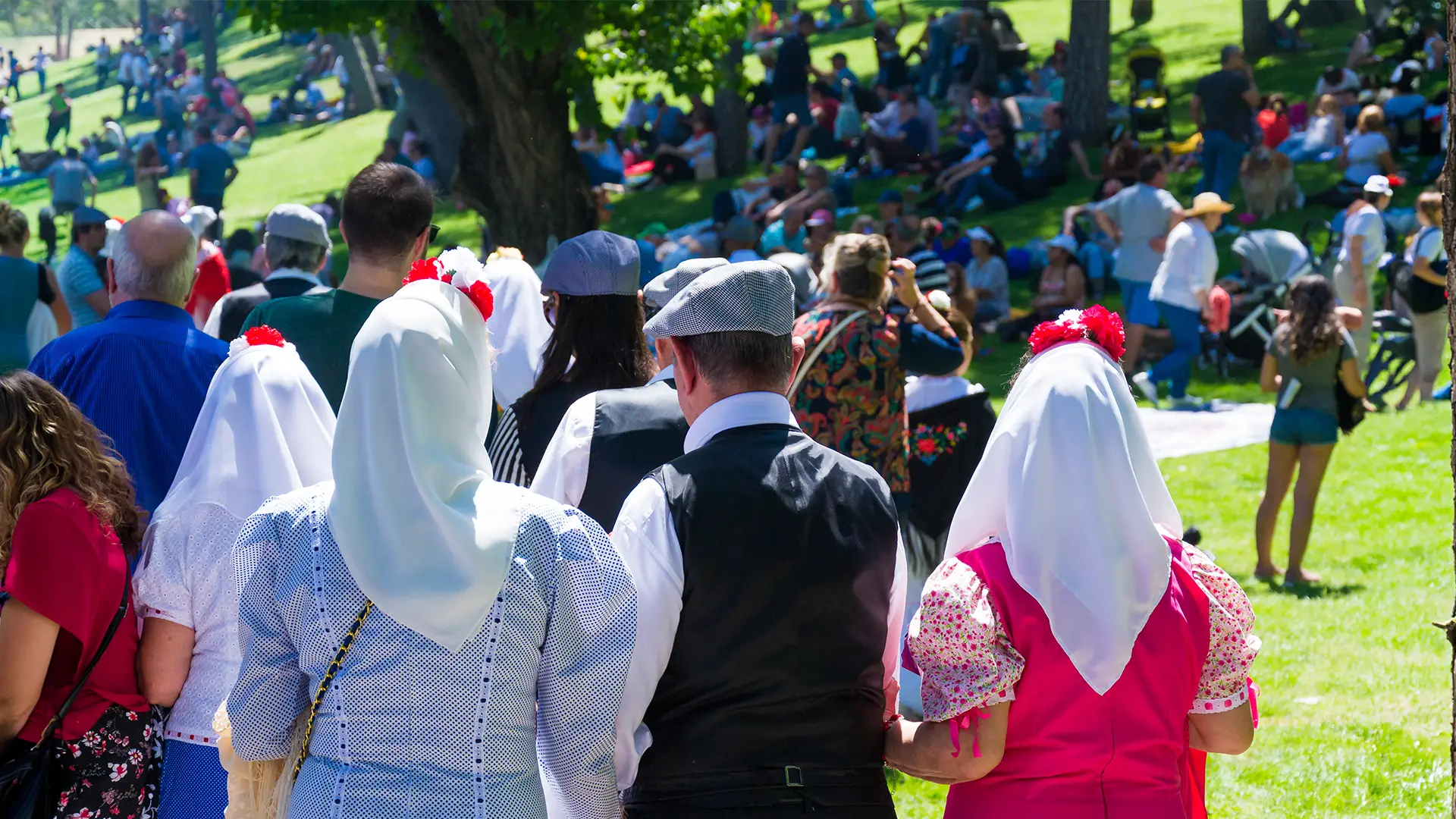
During the celebrations, it’s common to see people dressed in traditional “chulapo” and “chulapa” outfits, wearing carnations while music and dancing spill into the streets.
And then come the traditions that usually spark the most curiosity among expats:

- The carnations: The red and white carnations worn by chulapas (women wearing Madrid’s traditional festival attire) are not just decorative. Traditionally, they worked almost like a “secret language” to indicate a woman’s relationship status:
- Two white carnations: single
- Two red carnations: married
- One red and one white: engaged or in a relationship
- Two red and one white: widow
- A pink carnation: often worn by girls or simply for style
Men traditionally wear a single red carnation on their vest. The flower became one of the symbols of San Isidro because carnations bloom abundantly in spring and represent Madrid’s joyful and traditional spirit.
- The chotis dance: One of Madrid’s most iconic traditions, the chotis is danced to the sound of the organillo, a traditional street organ. What surprises many foreigners is that the couple appears to dance almost “on a single tile,” with one dancer barely moving while the other circles gracefully around them.
- The famous rosquillas: Most newcomers immediately laugh at the names “listas” and “tontas,” but San Isidro pastries actually come in four traditional varieties:
- Tontas: the simplest version, without glaze
- Listas: covered with sugar fondant and lemon
- Santa Clara: topped with white meringue
- Francesas: coated with almonds
- The “Agua del Santo”: Another tradition many expats discover for the first time is visiting the Ermita de San Isidro to drink water from the fountain linked to the saint. According to local legend, San Isidro miraculously made the spring appear centuries ago.
- Gigantes y Cabezudos: One of the most anticipated moments of San Isidro is the traditional parade of “Gigantes y Cabezudos,” scheduled for May 8th, 15th, and 16th in 2026. The parades begin at Plaza de la Villa, where giant traditional figures dance through Madrid’s streets accompanied by live music. Some of the city’s most beloved characters — like the chulapos Julián and Mari Pepa, Manolita Malasaña, La Latina, and Muhammad I — have been part of these celebrations for more than half a century, delighting both children and adults alike.
- The Pradera de San Isidro: Perhaps the most striking part for many expats is seeing thousands of people spending entire afternoons outdoors together — eating, talking, listening to music, and simply enjoying each other’s company.
Did you Know?
There’s a popular Spanish saying often heard around this time of year: “San Isidro labrador, quita el agua y saca el sol.”
The phrase is traditionally used to ask San Isidro for good weather during the festivities — something especially important for all the outdoor celebrations, picnics, and gatherings that fill Madrid every May.

And in 2026, the celebration will once again bring together tradition and modern culture across Madrid. The official program includes free concerts and activities throughout the city, alongside traditional religious events like the San Isidro procession on May 15th.
For many Americans especially, that collective atmosphere is what feels most different. The celebration is lively and festive, but it also feels deeply centered around community, family, and shared time together.
And that balance between tradition, music, food, and connection is often what makes San Isidro one of the experiences that changes the way expats see life in Spain.
Don’t Miss San Isidro 2026
If you’re living in Madrid this May, San Isidro is one of the best opportunities to experience the city beyond the typical tourist perspective.
From concerts and traditional dances to local food, family activities, and open-air celebrations, the festival offers a unique glimpse into Madrid’s culture and community spirit. You can check the official calendar of events and activities here: [link]
Because sometimes, it’s these traditions that make Spain start to feel like home.
Related Posts
NIE vs TIE in Spain: What Expats Need to Know (Q&A Guide)
Understanding the difference between the NIE and TIE is essential for expats moving to Spain.…
Mother’s Day in the USA: Why Expats Get Two Chances to Celebrate Mom in Spain
Living in Spain as an expat? Discover how Mother’s Day is celebrated in Spain and…
Spanish Nationality: What Expats Need to Know Before Applying
Thinking about Spanish nationality? Learn the key requirements, timeline, and process for expats in Spain…
Top 5 Cities to Live in Spain as a Digital Nomad
Explore Spain's top cities for digital nomads, from Madrid's buzz to Málaga's tech hub. Dive…