

NIE vs TIE in Spain: What Expats Need to Know (Q&A Guide)
Moving to Spain comes with a lot of new terms — and two of the most confusing are NIE and TIE. Many expats assume they are the same, interchangeable, or that one automatically leads to the other. In reality, they serve very different legal purposes — and understanding that difference is essential to avoid delays or issues during your relocation process.
In this guide, we break down exactly what each document is, when you need it, and answer the most common (and not-so-obvious) questions expats have.
What Is the NIE?
The NIE (Número de Identidad de Extranjero) is a unique identification number assigned to foreigners in Spain.
It is used for legal, administrative, and tax purposes and is required for most formal activities in the country. You will typically need a NIE if you plan to:
- open a bank account (they usually require a TIE, not just a NIE)
- buy or rent property
- sign contracts
- pay taxes
- carry out legal or financial transactions
Important:
The NIE is not a residence permit — it is only an identification number.
NIE: Frequently Asked Questions
- Do I need a NIE before moving to Spain?
-
Not always. It depends on your situation, but many processes require it early on.
- Can I get a NIE from abroad?
-
Yes. It can be requested through Spanish consulates abroad.
- Is there a deadline to get a NIE after arriving in Spain?
-
No fixed legal deadline. You must obtain it when required for legal or economic activities. 👉 Recommendation: apply as early as possible, as most procedures will require it.
- Does the NIE expire?
-
No. The number is permanent and remains the same for life.
- Can I work in Spain with just a NIE?
-
No. A NIE alone does not grant the right to work.
- Is the NIE the same as residency?
-
No. The NIE is only an identification number, not a legal status.
- Can I have a NIE without a visa?
-
Yes. It can be assigned for economic or legal interests without residency.
- Can I have more than one NIE?
-
No. Each person is assigned a single NIE for life.
- Does having a NIE give me legal rights in Spain?
-
No. Rights depend on your immigration status, not the NIE itself.
- Is the NIE linked to tax residency?
-
Not directly. Tax residency depends on time spent in Spain and other criteria (Spanish Tax Agency).
What Is the TIE?
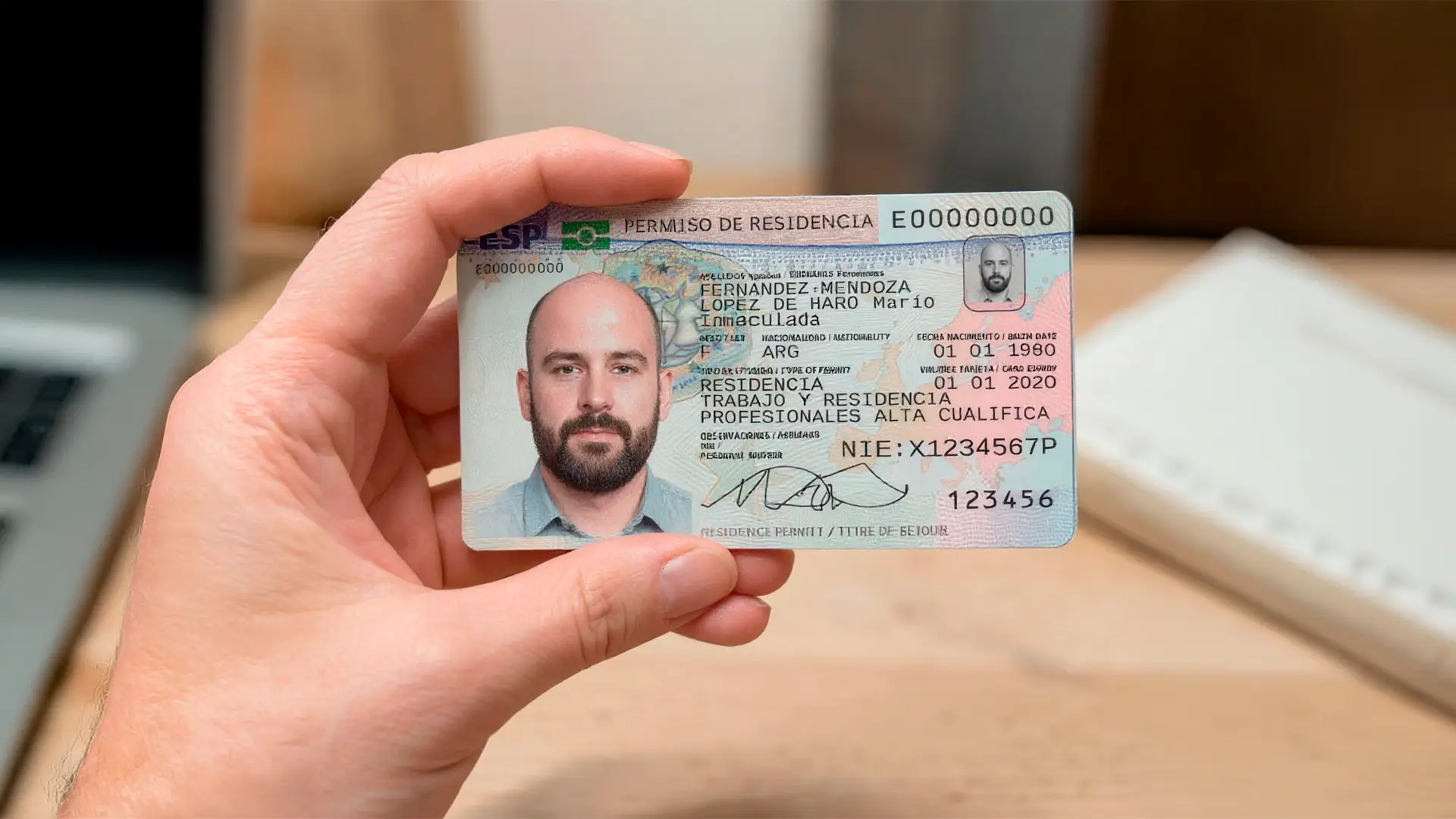
The TIE (Tarjeta de Identidad de Extranjero) is a physical residence card that proves your legal status in Spain. It includes your NIE, photo, fingerprint data, and details about your residence permit.
You must apply for a TIE if:
- your visa allows you to stay more than 6 months
- you are residing legally in Spain
It is usually processed after arriving in Spain with an approved visa.
Key difference:
The TIE confirms that you are legally residing in Spain.
TIE: Frequently Asked Questions
- What is the difference between NIE and TIE?
-
The NIE is a number; the TIE is a physical card proving legal residence.
- Do I automatically get a TIE after my visa is approved?
-
No. You must apply for it in Spain after your arrival.
- How long is a TIE valid?
-
It depends on your visa or residence permit duration.
- Is there a deadline to apply for the TIE after arriving in Spain?
-
Yes. You must apply within 30 days of entering Spain if your visa is valid for more than 6 months. 👉 Recommendation: book your appointment in advance, as availability can be limited.
- What happens if I miss the 30-day deadline for the TIE?
-
It may be considered a minor administrative infraction and can cause delays or complications. 👉 Recommendation: act quickly and regularize your situation as soon as possible.
- How long does it take to get a TIE?
-
It varies, but the card is usually issued within a few weeks after fingerprints.(40 days normally)
- Can I travel without a TIE?
-
Only under certain conditions; you may need additional authorization (e.g., regreso).
- Do I need the TIE to work in Spain?
-
Yes, if your residence permit includes work authorization.
- What happens if my TIE expires?
-
You must renew it. Staying with an expired card can affect your legal status.
- Can I renew my TIE from abroad?
-
In most cases, no. Renewals must be managed from Spain.
NIE vs TIE: The Key Difference
The confusion is common — but the distinction is simple:
- The NIE is your identification number
- The TIE is your residence card
You can have a NIE without living in Spain, but you cannot have a TIE without legal residency.
Common Mistakes Expats Make
One of the most common mistakes is assuming that having a NIE means you are legally settled in Spain. Others include delaying the TIE application, submitting incomplete documentation, or misunderstanding deadlines after arrival.
These small misunderstandings can lead to delays, complications, or even legal issues.
Why This Matters for Your Relocation
Understanding the difference between NIE and TIE is not just a technical detail — it directly impacts your ability to live, work, and settle in Spain smoothly. Getting it right from the beginning can save time, avoid unnecessary stress, and ensure your process moves forward without complications.
Need Help with Your NIE or TIE?
If you’re unsure which document you need — or how to manage the process correctly — getting the right guidance from the start can make all the difference.
At Relocation for Expats, we help you navigate every step with clarity, ensuring your documentation is handled properly from day one. Start your process with confidence here.
Related Posts
Mother’s Day in Spain: Why Expats Get Two Chances to Celebrate Mom
Living in Spain as an expat? Discover how Mother’s Day is celebrated in Spain and…
Spanish Nationality: What Expats Need to Know Before Applying
Thinking about Spanish nationality? Learn the key requirements, timeline, and process for expats in Spain…
Spanish Bureaucracy: 10 Terms Every American Expat Should Know
A clear guide to understanding Spanish bureaucracy: 10 essential terms every American expat needs to…
Finding a Home in Spain? This Is How We Help Expats Start Their New Life
Finding a home in Spain as an expat isn’t just about searching — it’s about…