
The 2026 World Cup is Being Played at 'Home,' but You’re Living it in Spain: the World Capital of Football

The 2026 World Cup is historic. For the first time, 48 teams will clash across North America. Your friends back home are booking flights to Miami, LA, or Mexico City. They are getting ready for the ultimate homecoming tournament. But you? You are an expat living in Spain.

While the matches physically take place in your home time zones, you are about to experience the tournament from the absolute epicenter of football culture. Living in Spain during a World Cup is a sports fan’s bucket list experience.

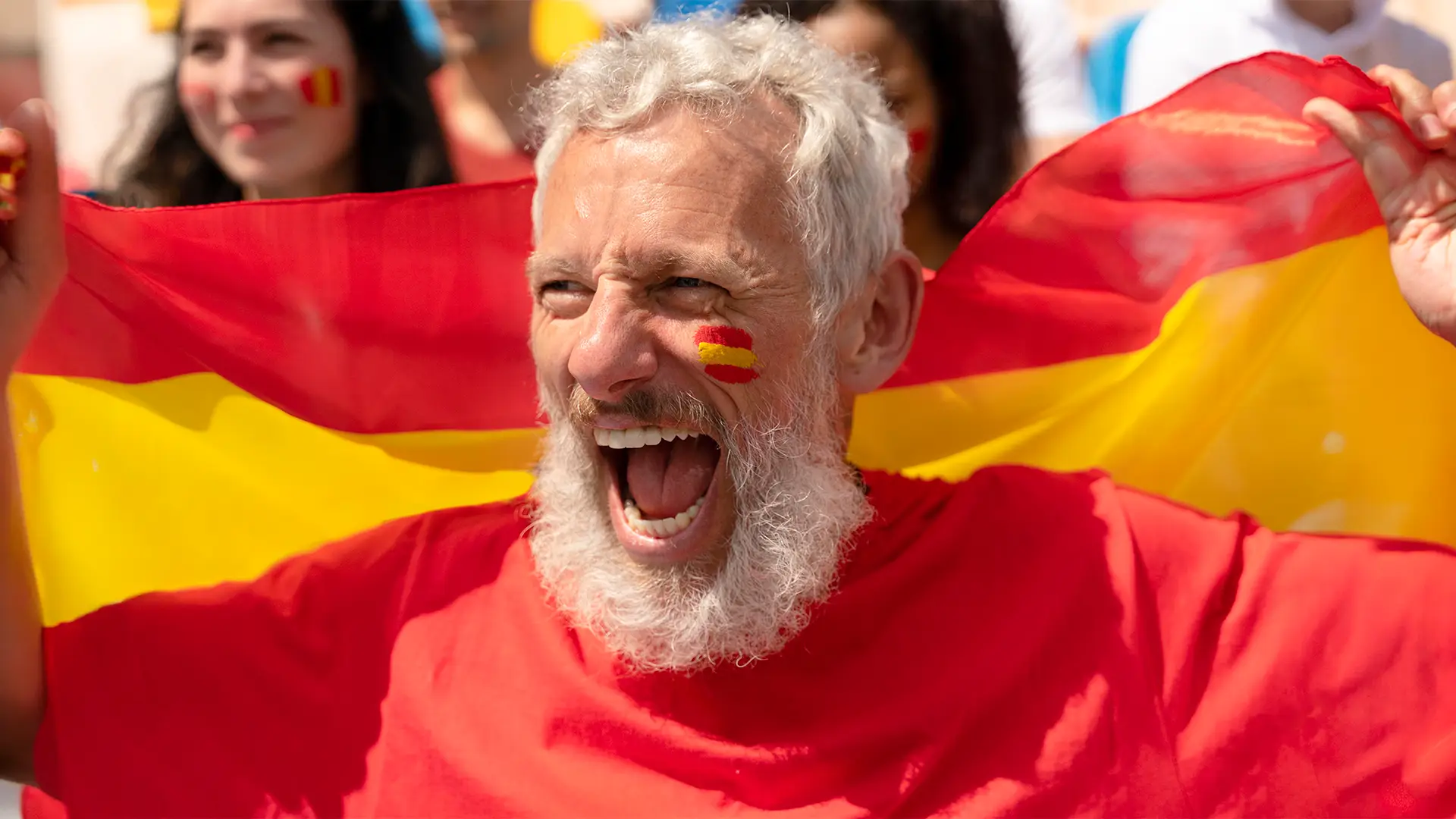
Imagine watching a World Cup match from a crowded Madrid bar where everyone is arguing about tactics. Imagine hearing a Spanish commentator scream “¡GOOOOOOOL!” for what feels like twenty seconds. Imagine celebrating a last-minute winner with strangers who suddenly become your friends.

The World Cup may be taking place back home. But if you’re living in Spain, you’ll be experiencing it from one of football’s true capitals.

Goodbye Tailgating, Hello Cañas: The Matchday Ritual

American sports culture often begins in the parking lot. Hours before kickoff, fans unfold chairs, fire up grills, throw footballs around, and spend the afternoon tailgating with friends and family.

In Spain, the stadium parking lot is just… a parking lot. The real magic happens in the bar de barrio.

Two hours before kickoff, terraces are already packed. Plates of patatas bravas and jamón start arriving. Someone orders another round of cañas. Every television is tuned to the match.

The tension builds slowly. By kickoff, the entire place is emotionally invested. The bartender has an opinion. The waiter has an opinion. The person sitting next to you definitely has an opinion. And somehow, by halftime, so do you. Football is not just a sport here. It is a national conversation.

People do not simply watch the game. They live it, breathe it, and scream at the television as if the coach could actually hear them through the screen.

Did you know?

When Spain won the 2010 World Cup, they scored only 8 goals in 7 matches, the lowest total ever by a World Cup champion.

Their secret? Tiki-taka. They kept the ball for so long that the other team often barely had a chance to breathe, let alone score.

The Football Survival Glossary

To survive your first World Cup in Spain, there is one rule: do not call it soccer.

Once you have mastered that, it is time to learn the local language of football

How Spaniards Refer to Their National Team:

La Roja

“The Red One.” This is the most common nickname for Spain’s national team, inspired by their iconic red jersey.

La Furia Roja

“The Red Fury.” A historic nickname associated with Spain’s intensity, passion, and never-give-up spirit.

La Selección

“The National Team.” A respectful and commonly used way to refer to the Spanish squad.

world cup 2026 spain
Facebook: Selección Española de Fútbol (SeFutbol)

Essential Matchday Slang:

Golazo

A spectacular, mind-blowing goal. Think of it as a 50-yard Hail Mary pass or a buzzer-beating three-pointer. When the ball flies into the top corner, shout: “¡Qué golazo!”

Caño

A nutmeg. This happens when a player passes the ball between a defender’s legs. Technically legal. Emotionally devastating.

Pichichi

The top goalscorer of a league or tournament. If someone keeps scoring nonstop, you can say: “He might become the Pichichi.”

Goleada

A blowout. A 5-0 scoreline is no longer just a win. It is a goleada.

Remontada

The sacred word of football drama: an epic comeback. Think Patriots vs. Falcons in Super Bowl LI, but with more shouting and probably more hand gestures.

Piscinazo

A flop or dramatic dive. If a player falls theatrically after minimal contact, half the bar may yell: “¡Piscinazo!”

Madrid’s World Cup Future Is Already Written

While the 2026 World Cup takes place in North America, Spain is already looking toward 2030.

Madrid’s Santiago Bernabéu Stadium is widely expected to play a major role in the 2030 World Cup, and it has been reported as the likely venue for the final.

If confirmed, the Bernabéu would become one of the rare stadiums in history to host two World Cup finals, after previously hosting the 1982 final.

For expats living in Madrid, this means something remarkable: you are not just living in a city that loves football. You are living in one of the future capitals of world football.

And by the time 2030 arrives, you'll already know exactly what a golazo, a remontada, and a proper Spanish football debate sound like.Trust us. They're impossible to forget.

The Expat Advantage

Living in Spain during the 2026 World Cup gives you the best of both worlds. You get to cheer on the USMNT as one of the host nations, while absorbing the world’s finest football passion right outside your front door.

So put on your jersey, walk down to your local plaza, order a plate of tapas, and get ready. The World Cup might be happening across the Atlantic, but the soul of the game is right here with you.

Post a comment

Your email address will not be published.

Información básica sobre protección de datos Ver más

  • Responsable: CABR RELOCATION SOLUTIONS FOR EXPATS.
  • Finalidad:  Moderar los comentarios.
  • Legitimación:  Por consentimiento del interesado.
  • Destinatarios y encargados de tratamiento:  No se ceden o comunican datos a terceros para prestar este servicio. El Titular ha contratado los servicios de alojamiento web a Godaddy que actúa como encargado de tratamiento.
  • Derechos: Acceder, rectificar y suprimir los datos.

Related Posts