

spanish buroaucracy

Spanish Bureaucracy: 10 Terms Every American Expat Should Know

If you’ve recently moved to Spain — or you’re planning to — there’s a moment almost everyone experiences. You’re finally settling in, maybe enjoying a tinto de verano in a plaza… when someone asks: “Do you already have your “Padrón”?” And suddenly, things feel a bit less simple.

Spain has its own administrative language. And for many Americans, the real challenge isn’t the move itself — or even the paperwork — it’s not understanding how everything connects and how things actually work once you arrive.

But once you understand these key terms of the Spanish administrative system, everything starts to make sense. What initially feels overwhelming becomes manageable — even predictable.

1. NIE (Número de Identidad de Extranjero)

The NIE is your foreigner identification number — and it’s one of the first things you’ll hear about.

If you’re coming from the U.S., think of it as something similar to a Social Security Number, but used specifically for administrative and legal purposes in Spain.

You’ll need it for almost everything:
• opening a bank account
• signing a lease
• paying taxes

Without it, it’s very difficult to move forward with any official process.

Important: If you come to Spain with a long-term visa, you will most likely already have an NIE assigned, so you won’t need to apply for it again after arrival.

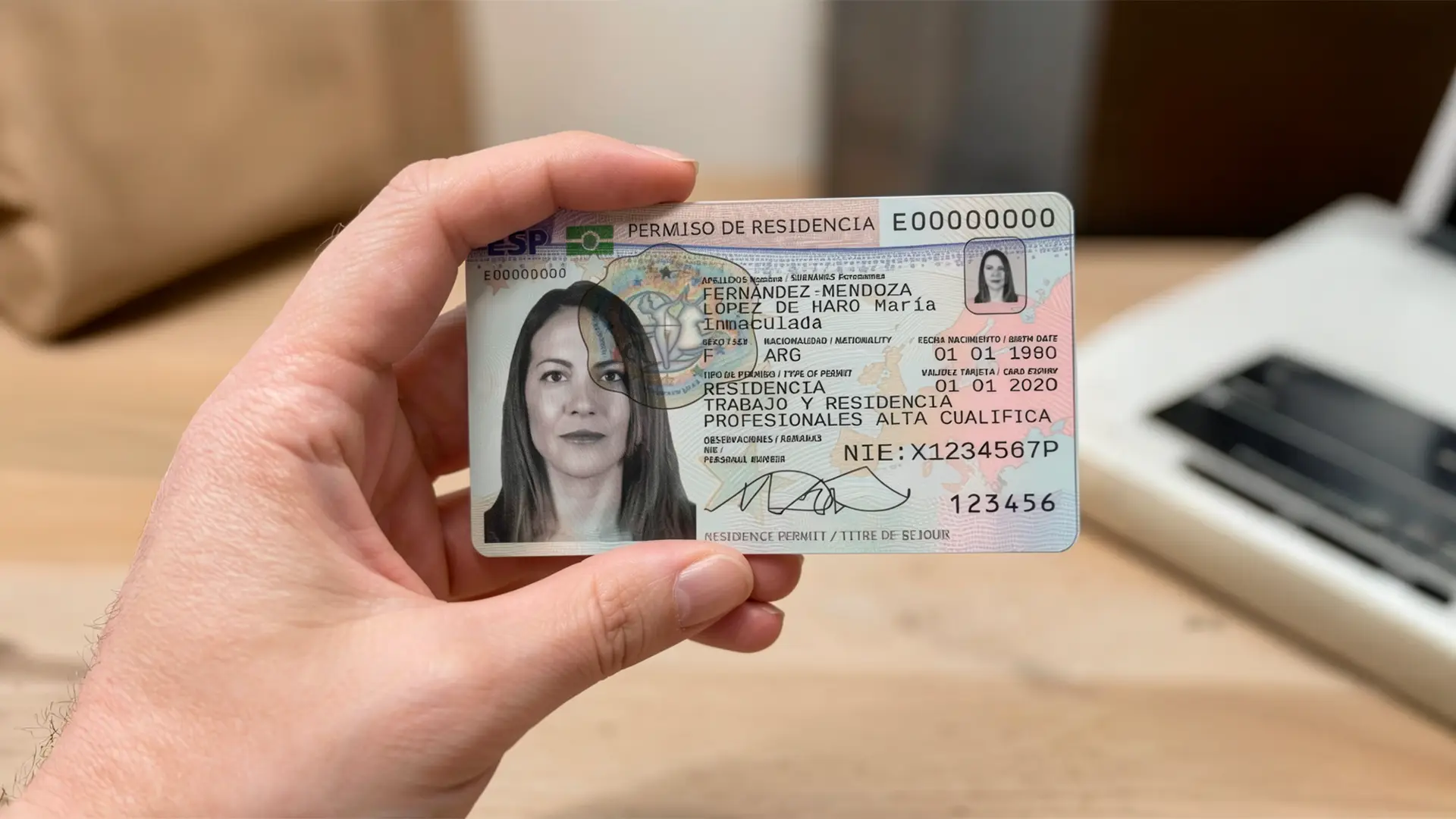
2. TIE (Tarjeta de Identidad de Extranjero)

While the NIE is just a number, the TIE is your physical residence card — your official ID as a legal resident in Spain.

Once you arrive in Spain with your visa approved and your NIE number assigned, your process isn’t finished. You’ll need to apply for your TIE within 30 days of arriving in Spain. This involves attending an appointment for fingerprints, followed by a second visit to collect your card — typically within 30 to 45 days.

This is the document you’ll carry with you daily and use for most formal processes in Spain.

3. EX-17 Form

The EX-17 form is one of the key documents used when applying for your TIE. Unlike in the U.S., where processes are often centralized, Spain uses very specific forms for each procedure. Submitting the correct form, properly completed, is critical.

You’ll use this form during your TIE appointment, along with:

  • your passport,
  • approval resolution,
  • photos,
  • and fee payment.

This form must be printed and signed before your appointment, as it cannot be submitted digitally. You will need to bring it with you in person to the police station on the day of your fingerprint appointment (toma de huellas) for your TIE.

spanish bureaucracy

4. Empadronamiento (Padrón)

The “padrón” is your official address registration with the local town hall.

In the U.S., you might simply update your address through your driver’s license or a utility bill. In Spain, however, you need to formally register your address with your municipality (ayuntamiento) to confirm where you live.

This step is essential — especially if you plan to stay in Spain for more than 6 months, as it is legally required.

You’ll need your padrón for:
• accessing public healthcare
• enrolling children in school
• applying for your TIE
• and many other administrative processes

In many cities such as Madrid or Barcelona, getting an appointment can take one to three weeks, so it’s one of the first things you should arrange after arriving.

5. Seguridad Social

Seguridad Social is Spain’s public social security system, and it plays a central role in both employment and healthcare.

If you’ve worked in the U.S., you may be familiar with Social Security. In Spain, however, this system is also directly linked to access to public healthcare.

One important thing to know is that it is a mandatory registration for certain visas — such as the Digital Nomad Visa.

You’ll typically interact with it when:
• starting a job in Spain
• registering as self-employed (autónomo)
• accessing public healthcare services

Important for U.S. citizens: Spain and the United States have a bilateral agreement that allows you to combine your contribution periods in both countries for retirement purposes. This means your years of work in the U.S. and Spain can be recognized together when calculating your pension.

6. Hacienda (Agencia Tributaria)

Hacienda is Spain’s tax authority — the equivalent of the IRS in the United States.

If you live in Spain for more than 183 days per year, you may be considered a tax resident, according to Spanish Personal Income Tax Law (IRPF, Article 9). This means you’ll need to declare your income and comply with Spanish tax regulations.

You’ll deal with Hacienda when:
• registering for taxes
• filing your annual tax return
• managing your fiscal obligations

Understanding this early is key, especially for Americans who may still have tax obligations in the U.S.

Important for U.S. citizens: Spain and the United States have a Double Taxation Agreement (DTA) that helps prevent being taxed twice on the same income. However, this doesn’t mean you don’t have to file in both countries. It’s important to understand how the treaty applies to your situation, so seeking professional guidance is highly recommended.

7. IPREM (Indicador Público de Renta de Efectos Múltiples)

The IPREM is a reference index used in Spain to calculate financial requirements for visas and other benefits. This is one of the most important concepts to understand before applying for residency.

As of 2026, the IPREM is approximately:

  • €600 per month
  • €7,200 per year

But what really matters is how it’s used. For example: the Non-Lucrative Visa requires 400% of the IPREM, which is around €28,800 per year.

Instead of fixed amounts, Spain uses this index as a benchmark — which means requirements can change over time.

8. Certificado Digital

One of the biggest surprises for many Americans is how much Spain relies on digital identification systems.

The certificado digital is essentially your secure digital identity. It allows you to complete official procedures online without needing to visit an office in person. With it, you can:

  • submit applications
  • sign documents
  • access government platforms

Once you have it set up, it can save you a significant amount of time.

9. Sede Electrónica

The Sede Electrónica is the official online platform where many government procedures in Spain take place.

In theory, it centralizes everything. In practice, it can feel a bit complex at first — especially if you’re not familiar with how the system works. You’ll use it to:
• book appointments
• submit applications
• check the status of your case

Many of these processes require a certificado digital or access through systems like Cl@ve. Once you understand how it works, it becomes an essential tool for managing your life in Spain.

Did you know? Cl@ve is Spain’s unified digital identification system. It allows you to access multiple government services online — like booking appointments, checking your work history, or filing taxes — without needing different passwords or a complex digital certificate.

10. Cita Previa

In Spain, you don’t usually just walk into an office and wait your turn. Most administrative processes require a cita previa, or prior appointment. You can book it by phone or online, often using your certificado digital or Cl@ve.

This applies to:
• police stations
• immigration offices
• local government offices

In major cities, appointments can take weeks — or even longer — to secure. Planning ahead is essential to avoid delays in your process.

Your Move to Spain, Done Right

Relocating to Spain isn’t just about getting your visa approved. It’s about knowing what to do next — and how to navigate Spanish bureaucracy with clarity and confidence from day one.

At Relocation for Expats, we guide you through every step of the process — from your visa application to your full setup in Spain.

Planning your move or already living in Spain? Get expert support and make your transition smoother, clearer, and stress-free.

Related Posts